


GLOW Peptide Blend (70mg)
$185.00
In stock
Ships same-day if ordered before 12 PM EST. Estimated delivery: 2 - 5 days
GLOW-70
Description
Chemical Information
Shipping Information
Buy GLOW Peptide Blend from Evolve Peptides. Each 70 mg vial contains a mix of 50mg GHK‑Cu, 10mg BPC‑157 and 10mg TB‑500 blended to strict quality standards, ensuring >99% purity, activity, and stability. Every batch is third-party tested and includes a Certificate of Analysis (COA). Fast, secure U.S. shipping available.
Note: GLOW Peptide Blend is for research use only. It’s not approved for human use.
What Is GLOW Peptide?
GLOW Peptide Blend is a synthetic research compound formulated to support studies in tissue repair, skin regeneration, and cellular recovery. Each 70 mg vial contains a precise mix of three well-studied peptides:
- GHK-Cu (50 mg) – A copper-binding tripeptide known for its role in collagen synthesis, wound healing, and gene expression related to skin health.
- BPC-157 (10 mg) – A pentadecapeptide derived from human gastric juice, studied for its regenerative effects on muscle, tendon, and vascular tissue.
- TB-500 (10 mg) – A synthetic fragment of Thymosin Beta-4 that supports cellular migration and angiogenesis, making it relevant in tissue repair models.
GLOW peptide blends these peptides for their complementary roles in regeneration and recovery. Each peptide supports a different but overlapping pathway, creating a synergistic effect that’s greater than the sum of its parts.
In research settings, this means enhanced outcomes in inflammation reduction, tissue recovery, vascular support, and cellular turnover – whether in skin, muscle, or internal systems.
In fact, the name GLOW peptide is a nod to the visible, aesthetic benefits researchers observe in skin regeneration and collagen support that’s largely driven by GHK-Cu.
Glow Peptide Mechanism of Action (Based on Research)
GLOW Peptide Blend and its individual components have been studied in a variety of non-clinical models. These peptides exhibit distinct but complementary mechanisms that may contribute to tissue regeneration, anti-inflammatory effects, and cellular repair.
GHK‑Cu (Copper Tripeptide)
GHK‑Cu, or copper tripeptide-1, is a small naturally occurring peptide with a high affinity for copper ions, and has garnered extensive scientific interest due to its regenerative properties.
One of its most striking features is its ability to modulate the expression of more than 4,000 human genes. This includes a marked shift in gene activity away from pathological states—such as chronic inflammation or tissue degeneration—toward profiles associated with tissue repair, regeneration, and homeostasis[1].
This broad genomic influence underpins its reputation as a key player in cellular remodeling and healing.
Mechanistically, GHK‑Cu promotes the synthesis of structural proteins vital to skin and connective tissue integrity, including collagen, elastin, decorin, and glycosaminoglycans. These molecules contribute to skin firmness, elasticity, and hydration, while also playing crucial roles in joint, vascular, and pulmonary tissue health [2].
In addition, GHK‑Cu tightly regulates matrix metalloproteinases (MMPs)—enzymes that break down extracellular matrix proteins—as well as their natural inhibitors (TIMPs). This balanced regulation is essential in maintaining controlled tissue remodeling, preventing excessive degradation, and ensuring orderly repair.
Beyond structural support, GHK‑Cu has shown promise in aiding angiogenesis (the formation of new blood vessels) and encouraging peripheral nerve outgrowth, which is particularly valuable in wound healing and nerve repair.
It also exhibits potent antioxidant and anti-inflammatory effects, mitigating oxidative stress in damaged tissues. These actions have been observed in various preclinical models, including those mimicking chronic obstructive pulmonary disease (COPD), where GHK‑Cu helped attenuate inflammatory responses and supported lung tissue restoration.
BPC‑157 (Body Protection Compound‑157)
BPC‑157 is a synthetic peptide consisting of 15 amino acids, originally derived from a protein found in human gastric juice. In preclinical research, particularly in rodent models, BPC‑157 has consistently demonstrated a range of tissue-supportive effects.
One of the most well-documented findings is its impact on musculoskeletal repair. Studies have shown that BPC‑157 enhances tendon outgrowth and promotes muscle regeneration. These effects appear to be mediated through the activation of the focal adhesion kinase (FAK)–paxillin signaling pathway, which plays a key role in cell migration, adhesion, and tissue remodeling [3].
In vivo studies have also revealed that BPC‑157 modulates angiogenesis—the process of new blood vessel formation—during tissue healing. Specifically, it upregulates the expression of vascular endothelial growth factor (VEGF), a critical molecule in vascular development and repair, within injured muscle and tendon tissues [4].
Interestingly, while this pro-angiogenic activity is evident in live animal models, it does not appear to induce direct angiogenesis in isolated in vitro systems, suggesting its vascular effects may be context- or environment-dependent.
In addition to its role in tissue remodeling, BPC‑157 has demonstrated cytoprotective and anti-inflammatory properties across several experimental injury models [5]. These include gastrointestinal, hepatic, and musculoskeletal systems, where the peptide has been observed to reduce tissue damage and support structural preservation under stress or injury conditions.
TB‑500 (Thymosin Beta‑4 Fragment)
TB‑500 is a synthetic peptide fragment derived from the larger protein thymosin beta‑4 (Tβ4), a naturally occurring molecule involved in cellular repair and regeneration.
The full-length Tβ4 is known to bind and sequester G-actin (globular actin), thereby regulating actin polymerization, a critical process for cell motility, shape, and structure [6]. Through this mechanism, Tβ4 has been shown in preclinical models to facilitate essential biological processes such as cell migration, wound closure, and angiogenesis.
TB‑500 is designed to mimic many of the biological activities of thymosin beta‑4 and has been studied in various animal models for its role in tissue repair and remodeling. In these studies, TB‑500 has been observed to influence extracellular matrix (ECM) dynamics, particularly by modulating fibrotic responses.
Evidence suggests it may exert these effects in part through transforming growth factor-beta (TGF‑β) signaling pathways, which are key regulators of inflammation, fibrosis, and ECM synthesis [7].
Moreover, TB‑500 has been shown to support the migration and survival of progenitor cells, including endothelial-like cells, in experimental models of cardiac, dermal, and connective tissue injury. These findings highlight its potential involvement in facilitating vascular remodeling and regeneration in damaged tissues.
TB‑500 remains an important investigative tool in the study of peptide-driven repair processes and cytoskeletal regulation.
GLOW Peptide Blend: Potential Synergy
By combining the three peptides, GHK‑Cu, BPC‑157, and TB‑500, researchers can explore complementary regenerative pathways. These investigations aim to harness multiple molecular mechanisms across wound healing, angiogenesis, extracellular matrix remodeling, and inflammatory modulation.
- GHK‑Cu acts at the genetic level, regulating thousands of genes associated with collagen and glycosaminoglycan synthesis, antioxidant responses, and tissue remodeling
- BPC‑157 accelerates vascular repair and tendon/muscle regeneration, enhances fibroblast migration, upregulates VEGF, and demonstrates anti-inflammatory and cytoprotective effects in rodent studies
- TB‑500 supports cell migration via actin regulation, limits fibrosis, and promotes endothelial or progenitor cell survival in models of tissue injury, including cardiac and dermal systems
While direct studies on their combined synergy remain limited, preclinical studies of the GLOW blend suggest outcomes with greater wound healing, collagen structure, and tissue organization compared to individual peptides.
Research Applications (GLOW Peptide Benefits)
While GLOW Peptide Blend has not been evaluated in human trials, its components, GHK-Cu, BPC-157, and TB-500, have been widely studied in preclinical models.
Researchers use this tri-peptide combination to explore potential interactions across multiple systems involved in repair, recovery, and remodeling. Below are research domains where individual components have shown promising results.
Skin and Connective Tissue Regeneration
GHK-Cu is frequently studied for its role in dermal remodeling, including stimulation of collagen, elastin, and glycosaminoglycan production in fibroblast cultures [8]. It has also been shown to tighten loose skin and improve skin thickness in animal models of aging [1].
In parallel, TB-500 has been investigated for its role in reducing dermal fibrosis and promoting epithelial migration following injury.
Although direct studies explicitly studying TB-500 in this application are rare, one study demonstrated that the actin‑binding domain (Ac‑LKKTETQ)—effectively TB‑500’s core—promoted dermal wound closure in aged and diabetic mouse models, accelerating keratinocyte migration, contracture, collagen deposition, and reducing scarring/fibrosis (via fewer myofibroblasts) [9].
Neurological and Neurovascular Repair
Preclinical studies suggest that GHK-Cu can enhance neurite outgrowth and stimulate neurotrophic gene expression [1]. TB-500 has also been associated with neural regeneration and reduced inflammation in models of traumatic brain injury.
BPC-157, meanwhile, has been studied for its effects on central nervous system recovery, including modulation of serotonin and dopamine receptors, as well as protective effects on blood-brain barrier integrity in rodent stroke and neuroinflammation models [10].
Researchers continue to explore these findings in relation to neurological tissue repair, vascular recovery, and oxidative stress modulation.
Musculoskeletal and Joint Healing
BPC-157 has demonstrated strong results in tendon-to-bone healing, ligament repair, and muscle recovery in various rodent models. One study found enhanced healing at tendon graft sites, along with accelerated fibroblast activity and angiogenesis at the injury interface [11].
TB-500 has been used to study cell migration in myoblasts and satellite cells, facilitating muscle fiber regeneration after injury.
Although evidence of TB‑500 (or Tβ4 fragment) in arthritis or cartilage degradation models is lacking, Tβ4 has been observed to regulate inflammation, cell migration, and tissue repair more broadly, and elevated Tβ4 levels are noted in rheumatoid arthritis joint fluid, though the functional impact remains unclear.
GHK-Cu contributes to musculoskeletal studies by promoting stem cell attraction, vascular support, and oxidative damage mitigation, all of which are relevant in long-term recovery models [12].
Cardiovascular and Vascular Studies
Thymosin β4 (Tβ4), from which the synthetic fragment TB‑500 is derived, has been shown in a murine myocardial infarction model to promote both myocardial and endothelial cell migration, survival, and improved post‑infarction cardiac function via activation of integrin-linked kinase (ILK) and Akt signaling pathways [13].
Preclinical research also indicates that BPC‑157 supports angiogenesis and microvascular recovery, upregulating VEGF and promoting vascular protection, although direct evidence for eNOS modulation has not been clearly demonstrated in animal models.
Additionally, GHK‑Cu has demonstrated in wound-healing and ischemia models the ability to increase endothelial cell proliferation, induce VEGF expression, enhance capillary density, and improve tissue perfusion, particularly in settings of vascular injury or aging-related circulation impairment.
Inflammation and Oxidative Stress Modulation
All three peptides have independently demonstrated anti-inflammatory effects in preclinical models. GHK-Cu downregulates inflammatory cytokines like IL-6 and TNF-α, while also activating antioxidant enzymes such as SOD and catalase.
BPC-157 has shown promise in modulating inflammatory damage in the gastrointestinal tract, liver, and skeletal muscle, especially under NSAID-induced stress or injury conditions.
TB-500 has been reported to reduce TGF-β–induced fibrosis and limit neutrophil infiltration in wound and organ models, suggesting potential applications in controlling excessive immune responses during tissue remodeling.
GLOW Peptide Characteristics
GHK‑Cu (Copper Tripeptide‑1)
- Molecular formula: C₁₄H₂₄N₆O₄·Cu (copper complex)
- CAS number: 89030‑95‑5
- Amino acid sequence: Gly‑His‑Lys (complexed with Cu²⁺)
- Synonyms: Copper tripeptide‑1; Prezatide copper; Glycyl‑L‑histidyl‑L‑lysine copper complex
- Molar mass: ~402.9 g/mol (≈340 g/mol peptide chain, ~402.9 including copper)
BPC‑157 (Body Protection Compound‑157)
- Molecular formula: C₆₂H₉₈N₁₆O₂₂
- CAS number: 137525‑51‑0
- Amino acid sequence: Gly‑Glu‑Pro‑Pro‑Pro‑Gly‑Lys‑Pro‑Ala‑Asp‑Asp‑Ala‑Gly‑Leu‑Val (15 residues)
- Synonyms: Bepecin; PL‑14736; Gastric pentadecapeptide
- Molar mass: ~1419.5 g/mol
TB‑500 (Thymosin Beta‑4 Fragment)
- Molecular formula: C₂₁₂H₃₅₀N₅₆O₇₈S
- CAS number: 77591‑33‑4
- Amino acid sequence: Ac‑Ser‑Asp‑Lys‑Pro‑Asp‑Met‑Ala‑Glu‑Ile‑Glu‑Lys‑Phe‑Asp‑Lys‑Ser‑Lys‑Leu‑Lys‑Lys‑Thr‑Glu‑Thr‑Gln‑Glu‑Lys‑Asn‑Pro‑Leu‑Pro‑Ser‑Lys‑Glu‑Thr‑Ile‑Glu‑Gln‑Glu‑Lys‑Gln‑Ala‑Gly‑Glu‑Ser (≈43 residues)
- Synonyms: Thymosin beta‑4 fragment; TB4; TB‑500
- Molar mass: ~4963 g/mol
All three peptides, as well as the blend, are most stable when refrigerated or frozen; typical freezer storage is at –20 °C or lower. Avoid repeated freeze–thaw cycles.
GLOW Blend is provided as a lyophilized powder in a single vial (typically 3 mL size), pre-measured to contain 70 mg total: GHK‑Cu 50 mg + BPC‑157 10 mg + TB‑500 10 mg.
GLOW vs Wolverine vs Skin + Tissue Stack Comparison
Feature | GLOW Peptide Blend (GHK‑Cu + BPC‑157 + TB‑500) | Wolverine Stack (BPC‑157 + TB‑500) | Skin + Tissue Stack (GHK‑Cu + BPC‑157) |
Peptides Included | GHK‑Cu, BPC‑157, TB‑500 | BPC‑157, TB‑500 | GHK‑Cu, BPC‑157 |
Primary Focus | Full-spectrum regeneration (skin, tissue, vascular) | Musculoskeletal & tendon healing | Skin remodeling & soft tissue repair |
Mechanism Complexity | High — targets multiple cellular pathways | Moderate — focused on healing & inflammation | Moderate — skin matrix + tissue support |
GHK‑Cu Role | Collagen stimulation, skin ECM modulation | Not included | Drives dermal and epithelial regeneration |
BPC‑157 Role | Vascular healing, fibroblast activity | Tendon, ligament, gut, and vessel repair | Tissue healing + inflammation reduction |
TB‑500 Role | Cell migration, anti-fibrotic activity | Enhances muscle and connective tissue repair | Not included |
Best Used In (Research) | Skin, muscle, tendon, vascular, cosmetic pathways | Tendon injuries, sports models, post-op | Skin aging, scar modeling, gut lining support |
Comparative Range | Most comprehensive blend | Focused healing and inflammation | Skin + soft tissue emphasis |
Research Status | Preclinical and lab-based use only | Preclinical, common in experimental protocols | Preclinical and cosmetic cell models |
Regulatory Note | Not FDA-approved; research use only | Not FDA-approved; research use only | Not FDA-approved; research use only |
Glow Peptide Safety and Side Effects in Studies (Preclinical Models)
The individual components of the GLOW Peptide Blend have been widely studied in preclinical settings, primarily using animal models and in vitro systems. Across these models, researchers have generally not reported significant adverse effects when peptides are administered at research-appropriate dosages.
GHK‑Cu has demonstrated favorable tolerability profiles in rodent skin and wound healing studies, with no cytotoxic effects at concentrations used for collagen stimulation and antioxidant activity [1].
BPC‑157, widely studied in models of gastrointestinal injury, tendon rupture, and neural trauma, has consistently shown minimal adverse responses even when administered chronically or at higher-than-standard experimental doses [14].
Similarly, TB‑500 (a synthetic analog of thymosin beta‑4) has been well tolerated in rodent cardiac and muscle repair models, with no evidence of organ toxicity or inflammatory overactivation reported in published studies [15].
That said, the combined administration of these three peptides (as found in the GLOW blend) has not been extensively characterized in formal toxicological studies. Early research applications suggest the combination remains well-tolerated in experimental frameworks.
No systemic adverse events or abnormal tissue responses have been reported in the limited published or community data evaluating multi-peptide stacks of this nature.
Important Note: These findings are limited to non-clinical, preclinical settings. GLOW Peptide Blend is a research chemical, not an approved therapeutic or supplement. It has not been evaluated for human safety or efficacy. No conclusions can or should be drawn regarding its use in humans. |
Certificate of Analysis (COA)
Every batch of GLOW Peptide Blend undergoes independent third-party testing to ensure identity, purity, and peptide concentration meet strict quality standards. The resulting Certificate of Analysis (COA) provides a detailed breakdown of:
- Peptide content and molecular identity
- Purity percentage (typically ≥99%)
- Stability and solubility profile (where applicable)
- Contaminant screening (e.g., heavy metals, endotoxins, microbial presence)
COAs are available for review on request and may also be accessible as downloadable PDFs directly from the product page. This gives you confidence as a researcher in verifying the consistency and integrity of our peptide products.
At Evolve Peptides, we prioritize scientific reliability by partnering only with certified testing labs that follow Good Laboratory Practices (GLP) and use validated analytical techniques such as HPLC and mass spectrometry.
Legal Disclaimer
Glow peptide compound is offered strictly for laboratory research purposes only and is not approved for human or veterinary use. It is intended solely for in vitro and controlled in vivo research applications conducted by qualified professionals.
It is not for human or animal consumption, diagnostic or therapeutic use, resale, or commercial formulation.
By purchasing this product, you agree to use it in accordance with all applicable laws and guidelines.
Scientific References
- Pickart, L., & Margolina, A. (2018). Regenerative and Protective Actions of the GHK-Cu Peptide in the Light of the New Gene Data. International Journal of Molecular Sciences, 19(7), 1987. https://www.mdpi.com/1422-0067/19/7/1987
- Pickart L, Vasquez-Soltero JM, Margolina A. GHK Peptide as a Natural Modulator of Multiple Cellular Pathways in Skin Regeneration. Biomed Res Int. 2015;2015:648108. Epub 2015 Jul 7. PMID: 26236730; PMCID: PMC4508379. https://pmc.ncbi.nlm.nih.gov/articles/PMC4508379/
- The promoting effect of pentadecapeptide BPC 157 on tendon healing involves tendon outgrowth, cell survival, and cell migration Chung-Hsun Chang, Wen-Chung Tsai, Miao-Sui Lin, Ya-Hui Hsu, and Jong-Hwei Su Pang Journal of Applied Physiology 2011 110:3, 774-780 https://journals.physiology.org/doi/full/10.1152/japplphysiol.00945.2010
- Sikiric, P., Seiwerth, S., Skrtic, A., Staresinic, M., Strbe, S., Vuksic, A., Sikiric, S., Bekic, D., Soldo, D., Grizelj, B., Novosel, L., Beketic Oreskovic, L., Oreskovic, I., Stupnisek, M., Boban Blagaic, A., & Dobric, I. (2025). Stable Gastric Pentadecapeptide BPC 157 as a Therapy and Safety Key: A Special Beneficial Pleiotropic Effect Controlling and Modulating Angiogenesis and the NO-System. Pharmaceuticals, 18(6), 928. https://www.mdpi.com/1424-8247/18/6/928
- Sikiric P, Skrtic A, Gojkovic S, Krezic I, Zizek H, Lovric E, Sikiric S, Knezevic M, Strbe S, Milavic M, Kokot A, Blagaic AB, Seiwerth S. Cytoprotective gastric pentadecapeptide BPC 157 resolves major vessel occlusion disturbances, ischemia-reperfusion injury following Pringle maneuver, and Budd-Chiari syndrome. World J Gastroenterol. 2022 Jan 7;28(1):23-46. PMID: 35125818; PMCID: PMC8793015. https://pmc.ncbi.nlm.nih.gov/articles/PMC8793015/
- Irobi E, Aguda AH, Larsson M, Guerin C, Yin HL, Burtnick LD, Blanchoin L, Robinson RC. Structural basis of actin sequestration by thymosin-beta4: implications for WH2 proteins. EMBO J. 2004 Sep 15;23(18):3599-608. Epub 2004 Aug 26. PMID: 15329672; PMCID: PMC517612. https://pmc.ncbi.nlm.nih.gov/articles/PMC517612/
- Shah R, Reyes-Gordillo K, Cheng Y, Varatharajalu R, Ibrahim J, Lakshman MR. Thymosin β4 Prevents Oxidative Stress, Inflammation, and Fibrosis in Ethanol- and LPS-Induced Liver Injury in Mice. Oxid Med Cell Longev. 2018 Jul 11;2018:9630175. doi: 10.1155/2018/9630175. PMID: 30116499; PMCID: PMC6079392. https://pmc.ncbi.nlm.nih.gov/articles/PMC6079392/
- Kim, J., & Jung, Y. (2015). Potential Role of Thymosin Beta 4 in Liver Fibrosis. International Journal of Molecular Sciences, 16(5), 10624-10635. https://www.mdpi.com/1422-0067/16/5/10624
- Philp D, Badamchian M, Scheremeta B, Nguyen M, Goldstein AL, Kleinman HK. Thymosin beta 4 and a synthetic peptide containing its actin-binding domain promote dermal wound repair in db/db diabetic mice and in aged mice. Wound Repair Regen. 2003 Jan-Feb;11(1):19-24. PMID: 12581423. https://pubmed.ncbi.nlm.nih.gov/12581423/
- Józwiak M, Bauer M, Kamysz W, Kleczkowska P. Multifunctionality and Possible Medical Application of the BPC 157 Peptide-Literature and Patent Review. Pharmaceuticals (Basel). 2025 Jan 30;18(2):185. PMID: 40005999; PMCID: PMC11859134. https://pmc.ncbi.nlm.nih.gov/articles/PMC11859134/
- Cushman CJ, Ibrahim AF, Smith AD, Hernandez EJ, MacKay B, Zumwalt M. Local and Systemic Peptide Therapies for Soft Tissue Regeneration: A Narrative Review. Yale J Biol Med. 2024 Sep 30;97(3):399-413. PMID: 39351323; PMCID: PMC11426299. https://pmc.ncbi.nlm.nih.gov/articles/PMC11426299/
- Dou Y, Lee A, Zhu L, Morton J, Ladiges W. The potential of GHK as an anti-aging peptide. Aging Pathobiol Ther. 2020 Mar 27;2(1):58-61. PMID: 35083444; PMCID: PMC8789089. https://pmc.ncbi.nlm.nih.gov/articles/PMC8789089/
- Maar, K., Thatcher, J. E., Karpov, E., Rendeki, S., Gallyas, F., Jr., & Bock-Marquette, I. (2025). Thymosin Beta-4 Modulates Cardiac Remodeling by Regulating ROCK1 Expression in Adult Mammals. International Journal of Molecular Sciences, 26(9), 4131 https://www.mdpi.com/1422-0067/26/9/4131
- Józwiak, M., Bauer, M., Kamysz, W., & Kleczkowska, P. (2025). Multifunctionality and Possible Medical Application of the BPC 157 Peptide—Literature and Patent Review. Pharmaceuticals, 18(2), 185. https://www.mdpi.com/1424-8247/18/2/185
- Maar K, Hetenyi R, Maar S, Faskerti G, Hanna D, Lippai B, Takatsy A, Bock-Marquette I. Utilizing Developmentally Essential Secreted Peptides Such as Thymosin Beta-4 to Remind the Adult Organs of Their Embryonic State-New Directions in Anti-Aging Regenerative Therapies. Cells. 2021 May 28;10(6):1343. doi: 10.3390/cells10061343. PMID: 34071596; PMCID: PMC8228050. https://pmc.ncbi.nlm.nih.gov/articles/PMC8228050/
Contents: 70 mg lyophilized (freeze-dried) powder provided in a 3 ml vial, sealed and sterile. Purity exceeds 99%, guaranteed.
Notes: Requires reconstitution with bacteriostatic water. (Sold here: BAC Water.)
Orders placed before 1 PM EST ship same day.
We use USPS for most of our deliveries. You can expect your parcel within 2-5 business days from when it leaves our warehouse.
Why Choose Us?
Lyophilized in Texas – 99%+ Purity Guaranteed
Our peptides are proudly lyophilized right here in the US, to exact specifications. Strictly no compromises.
Rigorously Third-Party Tested, Always
Every product page includes independent lab test results for every peptide we sell.
We Respond in Minutes, Not Days
We take pride in providing excellent support – we're here for your total research success.
200% Money-Back Guarantee
Test our product – if purity doesn't match the label, we refund 200%. No questions asked.
Related products
-
 Save $15.00
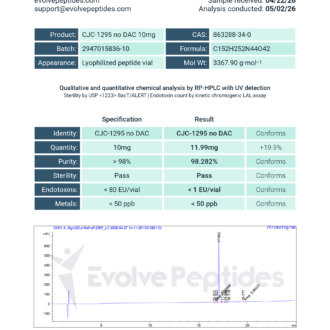
CJC-1295 5 mg (No DAC)
$59.90Original price was: $59.90.$44.90Current price is: $44.90.Save $15.00 -

 Save $80.00
Tirz 10 mg
$199.90Original price was: $199.90.$119.90Current price is: $119.90.Save $80.00 -

-
