


Sermorelin (10mg)
$75.00
In stock
Ships same-day if ordered before 12 PM EST. Estimated delivery: 2 - 5 days
SERM-10
Description
Chemical Information
Shipping Information
What Is Sermorelin?
Sermorelin acetate (GHRH 1-29) is a synthetic research peptide that functions as a growth hormone-releasing hormone (GHRH) analog.
Structurally, sermorelin is a truncated form of the endogenous GHRH, consisting of the first 29 amino acids. This is enough to retain full biological activity in stimulating the pituitary gland to release growth hormone (GH) in research models.
In preclinical studies, Sermorelin has been explored for its role in modulating GH secretion, influencing recovery, tissue repair, and metabolic processes. Its relatively short half-life and predictable pharmacokinetics make it useful in controlled laboratory settings where pulsatile GH release is under investigation.
The compound is valued in research due to its:
- High solubility in standard peptide solvents
- Good stability under appropriate storage conditions
- Specificity in activating GHRH receptors
Disclaimer: Evolve Peptides only sells sermorelin for research use only. This product is not for human consumption. Not approved for diagnostic, therapeutic, or veterinary applications.
Sermorelin Mechanism of Action (Based on Research)
Sermorelin is a synthetic peptide analog of the endogenous growth hormone-releasing hormone (GHRH), consisting of the first 29 amino acids of the 44-residue GHRH.
Although not approved for human use beyond diagnostic contexts, it has been extensively studied in research settings to understand its effects on the growth hormone (GH) axis and related physiological systems.
Stimulation of Endogenous Growth Hormone Release
Sermorelin binds to GHRH receptors on somatotrophs in the anterior pituitary, initiating a G-protein coupled receptor (GPCR) cascade that increases intracellular cAMP and calcium levels. This cascade triggers the synthesis and pulsatile secretion of growth hormone (GH) from the pituitary gland [1].
Unlike recombinant GH, which introduces exogenous hormone into the system, sermorelin supports natural pulsatile GH secretion, preserving the negative feedback loop through somatostatin and IGF-1. This mechanism makes it useful for studying hypothalamic-pituitary signaling dynamics in both juvenile and adult models.
Indirect Promotion of IGF-1 Production
GH released in response to sermorelin stimulates hepatic synthesis of insulin-like growth factor 1 (IGF-1), a key mediator of GH’s anabolic and mitogenic effects. Research shows that IGF-1 plays roles in cell proliferation, tissue repair, and metabolic regulation, making sermorelin a useful compound in preclinical models exploring growth and regeneration [2].
The delay between GH peak and IGF-1 rise allows researchers to study temporal hormone interactions and their downstream signaling effects via the JAK2/STAT5 pathway.
Neuroendocrine Modulation and Circadian Effects
The broader GHRH sleep/loss literature hints that sermorelin may influence sleep architecture, but direct evidence remains sparse. However, sermorelin itself hasn’t been deeply studied in this context [4].
Sermorelin’s ability to stimulate growth hormone (GH) release aligns with the body’s natural pulsatile secretion patterns, particularly during early-night sleep [5]. While direct studies on sermorelin’s impact on sleep architecture are limited, clinical trials have shown that sermorelin enhances GH pulsatility and increases IGF-1 levels in older adults.
Enhanced Bone Growth and Mineralization
Non-clinical studies involving growth hormone secretagogues (GHS), which share similar mechanisms with sermorelin, have shown noteworthy effects on skeletal health. For example, adult female rats treated with GHS like ipamorelin experienced increased bone mineral content and growth of cortical bone mass compared to controls [6].
Since sermorelin stimulates endogenous GH release, it’s plausible that similar pathways lead to improved bone remodeling, mineral deposition, and skeletal integrity in research models.
Research Applications
Sermorelin (GHRH‑(1-29)), a synthetic analog of growth hormone-releasing hormone, is frequently used in research to study its effects on the GH/IGF‑1 axis and downstream physiological systems.
Here are some key areas where observational and controlled studies have generated insights.
Cognitive Function & Brain Health
These findings suggest that sermorelin may support neurocognitive processes via GH/IGF‑1 signaling, although underlying mechanisms continue to be explored.
Body Composition & Adiposity
A 6‑month study administering GHRH analogs to older adults reported a 7.4% reduction in body fat and a 3.7% increase in lean muscle mass, associated with elevated IGF‑1 [7]. While sermorelin itself wasn’t the only agent studied, its GH-stimulating action underlies similar metabolic effects through downstream IGF‑1 modulation.
Pituitary Responsiveness & Hormonal Profiles
Research on healthy adults and elderly men shows that nightly doses of sermorelin robustly increase pulsatile GH release and raise IGF‑1 levels without exceeding normal physiological ranges.
This demonstrates sermorelin’s capacity to rejuvenate the somatotropic axis.
Endocrine Crosstalk & Hypogonadal Markers
Beyond GH/IGF‑1, sermorelin has been shown to modestly elevate FSH, LH, and prolactin shortly after administration in children with GH insufficiency, suggesting it may influence broader endocrine pathways [8]. In older adults, it also enhanced insulin sensitivity, supporting its role in metabolic regulation.
Skeletal & Bone Markers
Limited studies on GH secretagogues show potential in increasing bone mineral density and cortical bone mass in animal models . Though direct sermorelin research is scarce, its ability to stimulate endogenous GH suggests possible benefits for bone remodeling in preclinical settings.
Sermorelin Peptide Characteristics
Here’s a detailed breakdown of sermorelin, based on reliable scientific databases and product specifications:
- Molecular Formula: C₁₄₉H₂₄₆N₄₄O₄₂S
- CAS Number: 86168‑78‑7
- Amino Acid Sequence:
- Tyr-Ala-Asp-Ala-Ile-Phe-Thr-Asn-Ser-Tyr-Arg-Lys-Val-Leu-Gly-Gln-Leu-Ser-Ala-Arg-Lys-Leu-Leu-Gln-Asp-Ile-Met-Ser-Arg-NH₂
- Synonyms
- Sermorelin
- GRF (1-29) Amide
- GHRH(1-29) Amide
- Geref
- Gerel
- Human growth hormone-releasing factor fragment (1-29)
- Molar Mass
- 3 357.9 Da (free acid form)
- 3 417.9 Da (acetate salt form)
- Storage Recommendations
- Store lyophilized peptide at 2-8 °C (short-term) or −20 °C (long-term) in a desiccated vial
- After reconstitution, use promptly or aliquot and store at −20 °C to prevent degradation.
- Protect from repeated freeze-thaw cycles and avoid exposure to heat or UV light
Sermorelin Safety and Side Effects in Studies
Research involving Sermorelin acetate, primarily in animal models, suggests a favorable safety profile at standard research-level doses. Across multiple studies, Sermorelin has been shown to stimulate growth hormone (GH) release without inducing cytotoxic effects or organ-specific toxicity in rodents and other preclinical subjects [9].
In these models, the peptide’s short half-life and receptor-specific mechanism of action limit prolonged systemic exposure, which may reduce the risk of off-target effects. Researchers have not reported significant adverse outcomes when Sermorelin is administered within typical experimental dose ranges.
Limited Adverse Effects in Preclinical Studies
Observed side effects in controlled animal studies are minimal and often transient. Some reports note minor local reactions (e.g., irritation at the site of administration), but systemic toxicity has not been a significant concern in the literature.
Additionally, Sermorelin’s ability to stimulate GH release in a pulsatile and regulated fashion, rather than continuous overexpression, may offer a safety advantage in research modeling compared to longer-acting GH analogs.
Certificate of Analysis (COA)
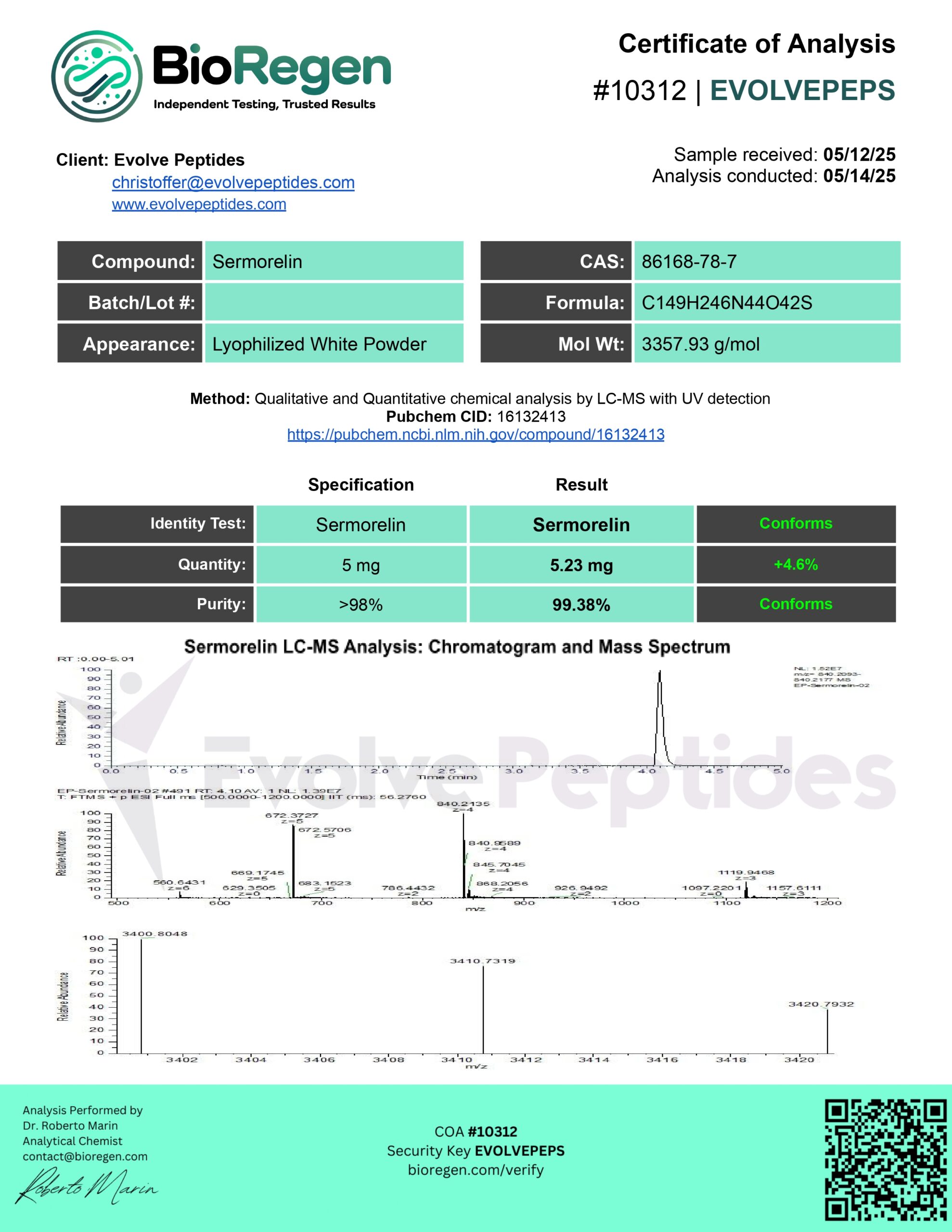
At Evolve Peptides, each batch of our research peptides undergoes rigorous third-party testing to ensure identity, purity, and consistency. Every bulk peptide product is accompanied by a Certificate of Analysis (COA), verifying compliance with analytical standards and confirming >98% purity for most peptides.
Upon request, you may receive a sample COA or a downloadable PDF specific to the lot number of their product. This ensures full traceability and transparency—critical in reproducible scientific research.
Each COA includes:
- Peptide identity (confirmed via mass spectrometry)
- Purity percentage (validated by HPLC)
- Lot number and production date
- Storage and handling recommendations
Our third-party labs follow industry-standard methodologies to deliver reliable, reproducible data that researchers can trust.
Legal Disclaimer
Sermorelin product is intended for laboratory research purposes only and is not approved for human or veterinary use.
Not for resale, diagnostic, or therapeutic applications.
All peptides sold by Evolve Peptides are strictly for in vitro or experimental use by qualified institutions and professionals. Buyers are responsible for ensuring compliance with local laws and regulations governing the handling and use of research chemicals.
Scientific References
- Walker RF. Sermorelin: a better approach to management of adult‑onset growth hormone insufficiency? Clin Interv Aging. 2006;1(4):307-308. doi:10.2147/ciia.2006.1.4.307. PMCID: PMC2699646. https://pmc.ncbi.nlm.nih.gov/articles/PMC2699646/
- Ishida J, Saitoh M, Ebner N, Springer J, Anker SD, von Haehling S. Growth hormone secretagogues: history, mechanism of action, and clinical development. JCSM Rapid Communications. 2020;3(1):25-37. doi:10.1002/rco2.9. https://www.researchgate.net/publication/339145909_Growth_hormone_secretagogues_history_mechanism_of_action_and_clinical_development
- Born, J., Perras, B., Marshall, L., Köhler, G., & Fehm, H. L. (1999). Sleep and endocrine changes after intranasal administration of growth hormone-releasing hormone in young and aged humans. Psychoneuroendocrinology, 24(7), 743-757 https://www.sciencedirect.com/science/article/abs/pii/S030645309900027X
- Obál, F. Jr., Taishi, P., Kacsóh, B., Gardi, J., & Krueger, J. M. (1999). Growth hormone‑releasing hormone activates sleep regulatory neurons of the rat preoptic hypothalamus. American Journal of Physiology‑Regulatory, Integrative and Comparative Physiology, 277(R…), R147-R156. https://pmc.ncbi.nlm.nih.gov/articles/PMC2806209/
- Lipshultz, L. I., Pastuszak, A. W., et al. (2020). Beyond the androgen receptor: the role of growth hormone secretagogues in hypogonadism and metabolic syndrome. Translational Andrology and Urology, 9(2), 621-633. https://pmc.ncbi.nlm.nih.gov/articles/PMC7108996/
- Svensson J, Lall S, Dickson SL, Bengtsson BA, Rømer J, Ahnfelt‑Rønne I, Ohlsson C, Jansson JO. The GH secretagogues ipamorelin and GH‑releasing peptide‑6 increase bone mineral content in adult female rats. J Endocrinol. 2000 Jun;165(3):569‑77. PMID: 10828840. https://pubmed.ncbi.nlm.nih.gov/10828840/
- Garcia, J. M., Merriam, G. R., & Kargi, A. Y. (2019, October 7). Growth hormone in aging. In K. R. Feingold, B. Anawalt, A. Boyce, et al. (Eds.), Endotext. MDText.com, Inc. Retrieved from https://www.ncbi.nlm.nih.gov/books/NBK279163
- Baker, L. D., Barsness, S. M., Borson, S., Merriam, G. R., Friedman, S. D., Vitiello, M. V., … Peskind, E. R. (2011). Tesamorelin, a growth hormone-releasing hormone analogue, improves cognitive function in MCI and healthy aging: Results of a randomized controlled trial. Alzheimer’s & Dementia, 7(4), S602. https://alz-journals.onlinelibrary.wiley.com/doi/full/10.1016/j.jalz.2011.05.1439
- Walker, R. F. (2006). Sermorelin: A better approach to management of adult-onset growth hormone insufficiency? Clinical Interventions in Aging, 1(4), 307-308. https://pmc.ncbi.nlm.nih.gov/articles/PMC2699646
- Sermorelin. PubChem, CID 16132413. Molecular formula: C₁₄₉H₂₄₆N₄₄O₄₂S; molar mass: 3357.9 g/mol; CAS registry number: 86168‑78‑7. https://pubchem.ncbi.nlm.nih.gov/compound/Sermorelin
Contents: 10 mg lyophilized (freeze-dried) powder provided in a 3 ml vial, sealed and sterile. Purity exceeds 99%, guaranteed.
Notes: Requires reconstitution with reconstitution solution. (Sold here: Reconstitution Solution.)
Application: Potential research application in weight loss studies, particularly obesity.
Chemical Formula: C149H246N44O42S
PubChem CID: 16129620
CAS Number: 901758-09-6
Molecular Weight: 3357.933 g/mol
Storage: Store at ≤8°C, sealed, away from heat, light, and moisture. The colder the better.
Purity: >99%
Orders placed before 1 PM EST ship same day.
We use USPS for most of our deliveries. You can expect your parcel within 2-5 business days from when it leaves our warehouse.
Why Choose Us?
Lyophilized in Texas – 99%+ Purity Guaranteed
Our peptides are proudly lyophilized right here in the US, to exact specifications. Strictly no compromises.
Rigorously Third-Party Tested, Always
Every product page includes independent lab test results for every peptide we sell.
We Respond in Minutes, Not Days
We take pride in providing excellent support – we're here for your total research success.
200% Money-Back Guarantee
Test our product – if purity doesn't match the label, we refund 200%. No questions asked.
Related products
-
 Save $90.00
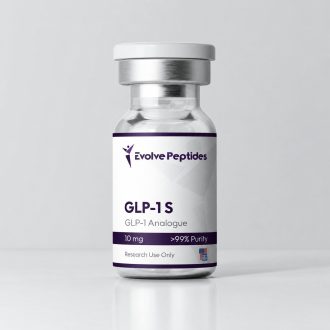
GLP-1 S 10 mg
$219.90Original price was: $219.90.$129.90Current price is: $129.90.Save $90.00 -

-


